Google Reviews
Google Review Alerts for Immediate Action
Get instant Google review alerts by email and Slack, prioritize negative sentiment, and reduce time-to-response across all locations.
Target keyword: google review alerts
Direct search intent page
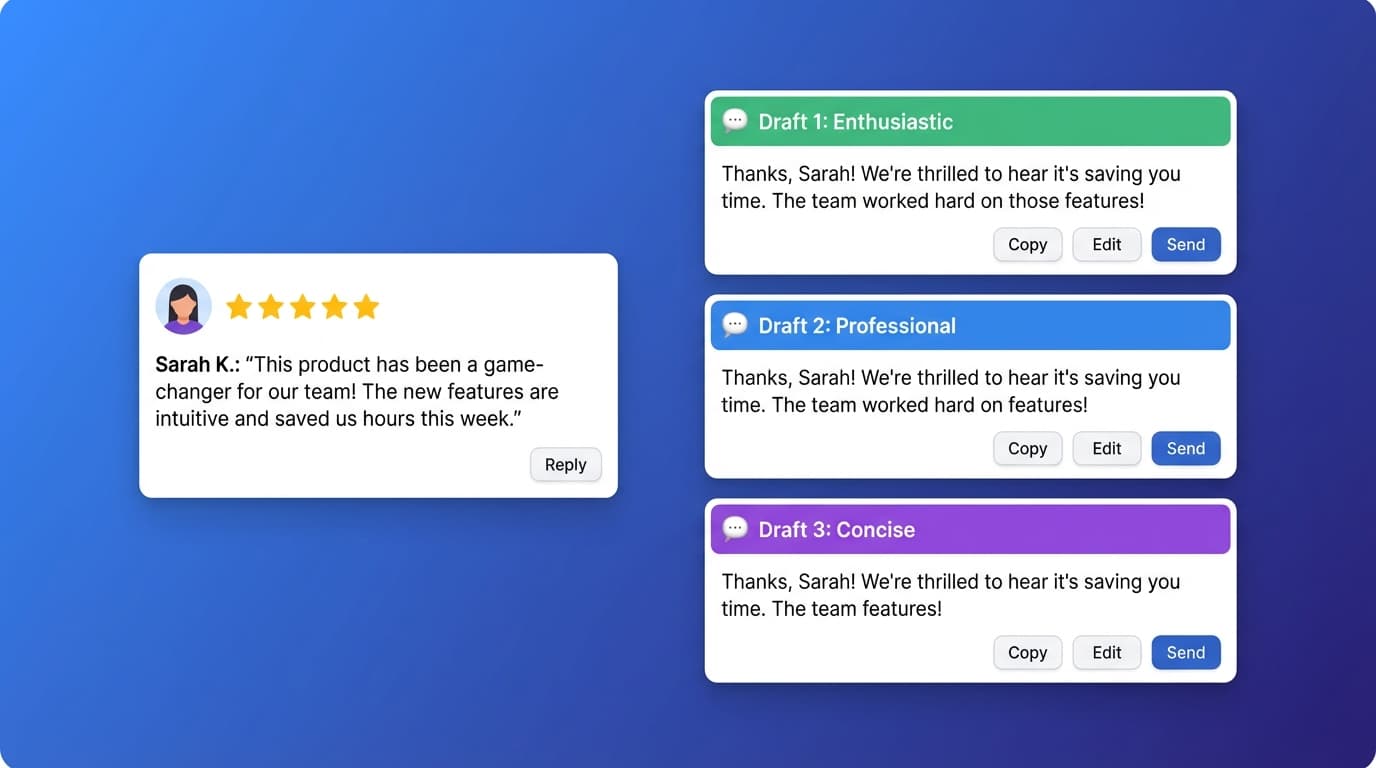
Visual summary
Clear workflow, not another noisy dashboard
This page gives you the operating model teams actually use: centralized review intake, urgency routing, clear ownership, and faster response loops.
Why teams struggle today
Google reviews often go unnoticed for hours or days.
Negative feedback can spread before teams even see it.
No prioritization between routine and urgent review events.
What you get
Instant notifications when a new Google review is posted.
Urgency scoring to focus on the reviews that matter most.
Faster resolution loops and better rating protection.
Best fit for
How to implement this in a real team
Most teams already know they should respond faster, but execution breaks down without clear process. Use this rollout structure to move from ad-hoc monitoring to a repeatable review operations system.
1) Connect your review channels
Start by linking your primary sources so incoming reviews are visible in one place. This eliminates manual checking and gives teams a consistent operating view.
2) Define urgency and ownership rules
Set practical routing logic for high-risk feedback, unresolved complaints, and reputation-sensitive mentions. Every review should have an owner and target response window.
3) Respond with a repeatable workflow
Use draft responses, approvals, and publishing rules that keep tone consistent. This helps teams respond quickly without sacrificing quality or brand voice.
4) Review trends weekly
Track recurring complaints, response time, and sentiment movement. Trend visibility is how teams move from reactive monitoring to proactive improvement.
Implementation checklist
If your current process depends on memory, Slack noise, or manual tab checks, this checklist gives your team a simple operating baseline. It is intentionally practical so execution stays lightweight while quality improves.
Frequently asked questions
How quickly should teams respond to negative reviews?
A strong baseline is same-day for critical feedback and within 24 hours for standard negative reviews. The most important factor is consistency across locations and owners.
Do we need a separate workflow for each channel?
You need channel-aware context, but not fully separate processes. Centralized routing and response standards usually outperform fragmented channel-by-channel handling.
How do we avoid this becoming another unused dashboard?
Tie review monitoring to real operating routines: owner assignment, clear SLAs, response templates, and weekly trend reviews. Workflow adoption matters more than raw data volume.
Want this workflow live in your team this week?
MentionReview helps operators monitor, prioritize, and respond faster across every channel.