Healthcare & Medical
Review Monitoring for Healthcare
Patients choose providers based on online reviews. MentionReview monitors Google, Healthgrades, Vitals, Zocdoc, and more — alerting your practice manager instantly so you can respond with care.
Platforms we monitor for healthcare & medical
Quick visual overview
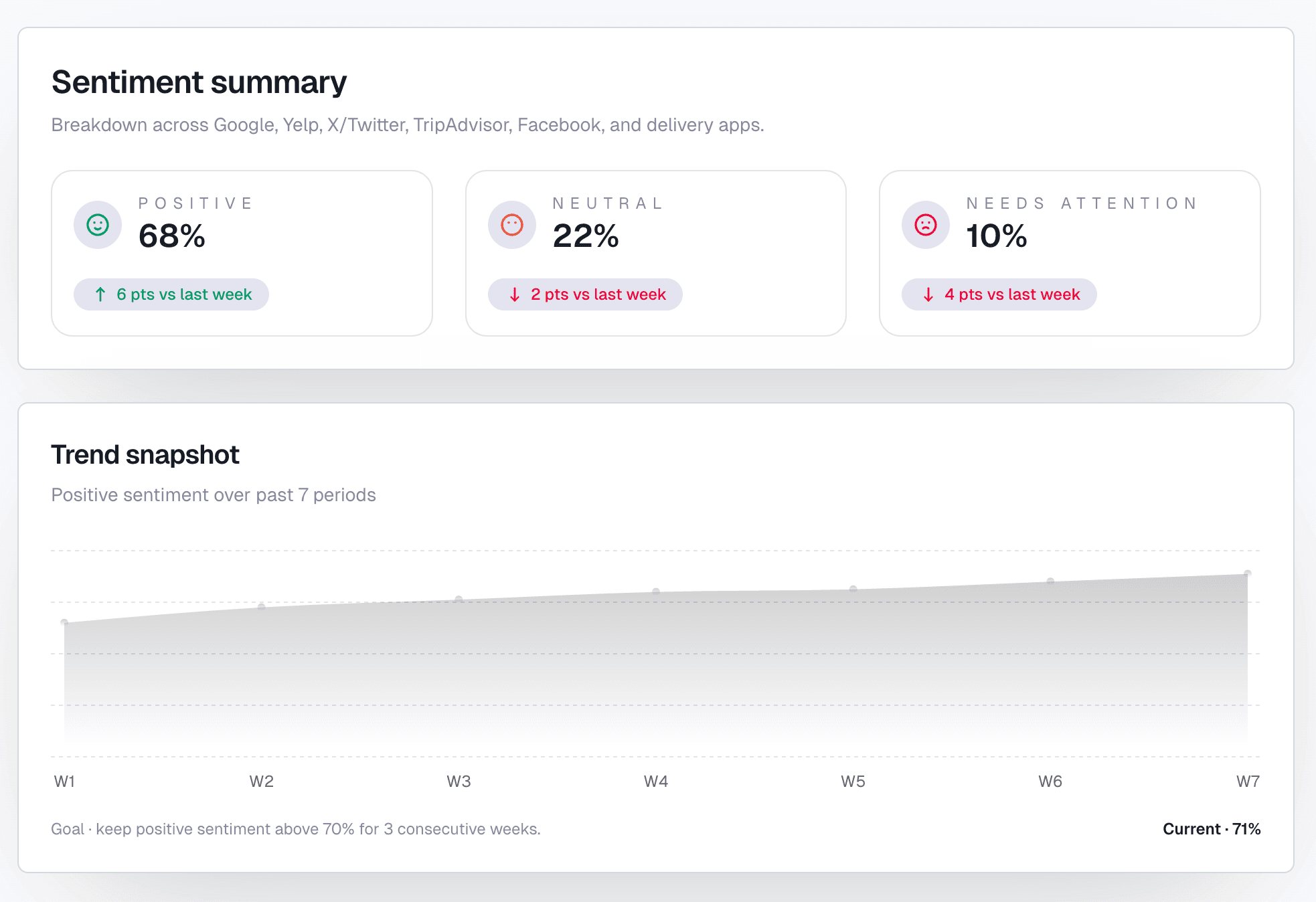
One clear inbox for every healthcare & medical review channel
Instead of jumping between platforms, your team can review sentiment, source, and urgency in one view. This keeps attention on response quality and operational follow-through.
The challenges healthcare & medical teams face
Patients research providers online
84% of patients use online reviews to evaluate doctors. A few bad reviews can shift patient volume away from your practice.
HIPAA-sensitive responses
Replying to patient reviews requires care to avoid disclosing health information. Staff often avoid responding at all.
Scattered across niche sites
Healthgrades, Vitals, Zocdoc, RateMDs — healthcare reviews are spread across specialty sites that are hard to track manually.
See what an alert looks like
This is the kind of review MentionReview catches and alerts you about in real-time.
“Waited over an hour past my appointment time. When I finally saw the doctor, it was a 5-minute rush job.”
How MentionReview helps
Healthcare-aware monitoring
We aggregate reviews from all healthcare-specific platforms plus Google and social media.
AI replies with HIPAA guidance
AI-drafted replies use professional language that acknowledges concerns without disclosing patient information.
Practice manager alerts
Route negative reviews to the office manager and positive reviews to your marketing team.
A practical review response workflow for healthcare & medical
Strong reputation management is a repeatable operating process, not a one-time cleanup project. These are the four stages teams use to move from scattered review monitoring to consistent response quality.
1) Capture every review source
Connect Google, Healthgrades, Vitals and your other active channels so your team stops relying on manual tab-checking. MentionReview centralizes incoming reviews into one operational inbox where context is visible at a glance.
2) Prioritize by real business risk
Not every review requires the same urgency. Teams can triage by rating, sentiment, recurring themes, and account ownership so severe complaints are handled first while routine feedback is queued efficiently.
3) Respond with clear ownership
Assign each review to the right person, draft a response, and publish quickly. This avoids the common gap where everyone sees a review but nobody is accountable for writing the response.
4) Track patterns and improve operations
Review trends become an input for coaching, staffing, and process improvements. Over time, teams can reduce repeated complaint themes and improve overall rating stability across locations.
Why this matters for healthcare & medical revenue and trust
In most categories, prospects compare several providers before they ever talk to your team. Public reviews become a high-impact trust layer that influences whether someone clicks, calls, books, or walks away. When response times are slow, unresolved complaints can compound and shape buyer perception. When workflows are consistent, you protect conversion, improve customer confidence, and reduce reputation volatility.
MentionReview gives teams a process for handling this at scale: one inbox, clear ownership, faster replies, and trend visibility. The result is not just better-looking profiles—it is more predictable operational quality across locations and teams.
Common questions from healthcare & medical teams
How often should healthcare & medical teams review incoming feedback?
For most teams, high-risk reviews should be reviewed in near real time, while lower-risk reviews can be handled in scheduled response blocks. The key is to keep critical issues from sitting unnoticed.
How fast should we respond to negative reviews?
A practical target is within the same business day for urgent reviews and within 24 hours for standard negative feedback. Faster response times usually improve trust signals for future buyers.
What makes this more than a dashboard?
The workflow matters as much as visibility: routing, ownership, response drafting, and trend analysis are what turn raw reviews into operational actions that actually improve outcomes.
Start monitoring healthcare & medical reviews today
Free plan available. Setup takes under 5 minutes.