Why Yelp Needs Its Own Workflow
Yelp is not Google, and teams that treat it the same lose time and miss context.
Yelp audiences care deeply about:
- service quality,
- consistency,
- and authenticity of owner responses.
A lazy, generic response hurts trust more than no response.
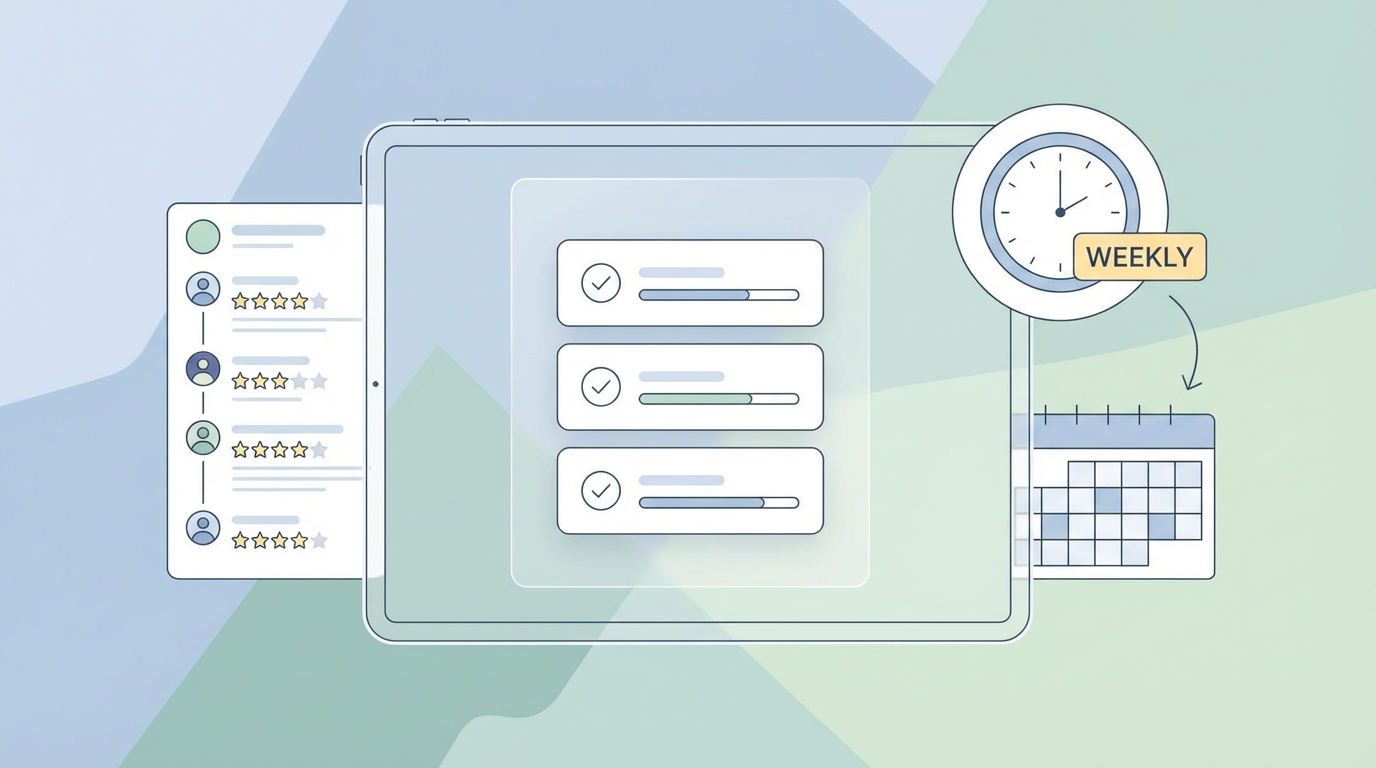
Weekly Yelp Monitoring Checklist
Daily (10–15 minutes)
- Check new reviews and star changes
- Flag 1–2 star reviews for priority response
- Look for repeated complaint patterns
Weekly (30–45 minutes)
- Categorize top complaint themes
- Compare this week’s sentiment to last week
- Audit unresolved negative reviews
- Review competitor rating movement
Monthly (60 minutes)
- Update response templates based on common issues
- Train staff on recurring service gaps
- Share location-level insight summary with leadership
Priority Matrix for Yelp Reviews
| Priority | Trigger | Response target |
|---|---|---|
| P1 | 1-star with safety or misconduct claim | 1 hour |
| P2 | 1–2 star without legal risk | 4 hours |
| P3 | 3-star mixed feedback | 12 hours |
| P4 | 4–5 star | 24 hours |
Yelp Response Quality Rules
- Reference one specific detail from the review
- Acknowledge the impact on the customer
- Explain concrete corrective action
- Offer offline follow-up path
- Keep tone human and concise
What Not to Do
- Copy-paste the same apology
- Argue publicly with the reviewer
- Ask staff/friends for manipulated review behavior
- Leave negative reviews unanswered for days
Fast Implementation Plan
- Turn on alerts for every new Yelp review
- Route by location owner and escalation level
- Use templates for tone consistency
- Track SLA and weekly issue themes
Final Takeaway
Yelp monitoring works best when it is operationalized as a checklist, not treated as ad-hoc social media work.
A structured cadence protects your rating and gives teams a repeatable system for reputation health.